

Once a Rider, Always a Rider
I don’t ride motorcycles anymore.
That surprises some people.
After all, motorcycles are a major part of my law practice. I represent riders and their families. I spend a lot of (most of?) time thinking about motorcycle crashes, motorcycle safety, and the challenges riders face on Wisconsin roads.
But the truth is, I haven’t ridden in years.
That doesn’t mean I stopped being a rider.
It just means I stopped riding.
Like a lot of things in life, the story starts earlier than that.
It starts with a bicycle.
The first time I got on a bicycle, I was hooked.
Maybe it was the independence. Maybe it was the speed. Maybe it was the feeling of the wind blowing through my hair as I realized I could go somewhere entirely under my own power. Whatever it was, something clicked.
For the first time, the world felt bigger.
I could go farther. Explore more. Take a different road just because it looked interesting. I didn’t need anyone to drive me somewhere. I didn’t need a plan. I just needed two wheels and enough daylight to get home.
Then I got on a motorcycle.
If the bicycle was freedom, the motorcycle was freedom turned up to eleven.
Like most kids where I grew up, I first kicked my leg over a little 50cc dirt bike. We’d ride those things everywhere. That tiny engine made a high-pitched whine that drove adults crazy, but it also meant everybody knew where we were. Looking back, it probably kept us out of more trouble than it caused.
To us, those bikes were freedom machines.
We weren’t riding to get somewhere.
We were riding because there were roads to explore, trails to follow, and just enough daylight to see what was around the next corner.
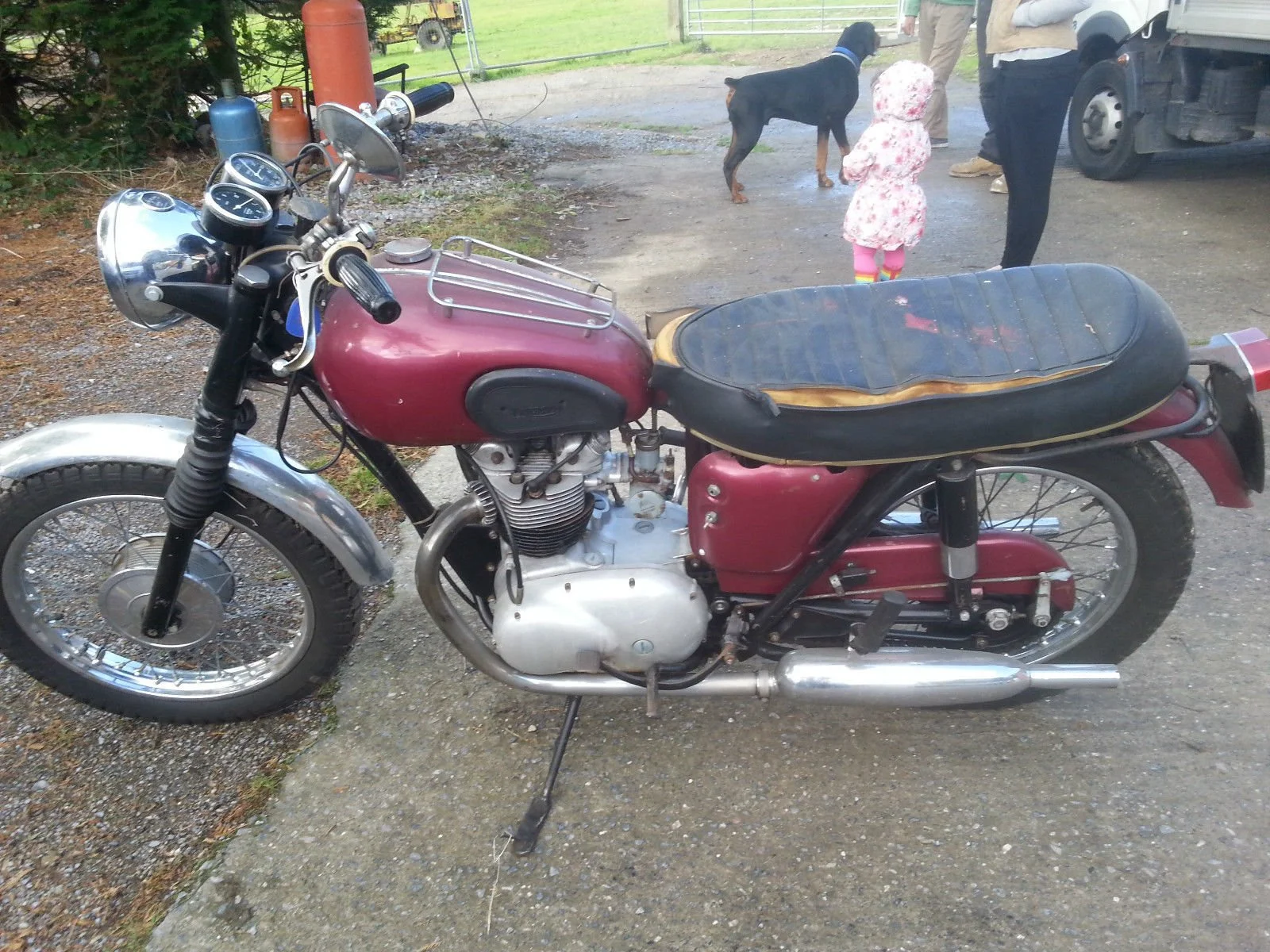
As I got older, I started riding a friend’s Triumph T100 Tiger.
It wasn’t the biggest bike on the road.
It wasn’t the fastest.
It didn’t need to be.
It was plenty of motorcycle for me.
What I loved wasn’t the horsepower.
It was the experience.
There’s something difficult to explain to people who have never ridden. Riding a motorcycle can make you feel completely alone and completely connected at the same time.
You’re isolated from everyone else. There’s no passenger compartment. No radio. No distractions. No cocoon of steel around you.
It’s just you.
But somehow, because there’s nothing separating you from the world, you become connected to everything.
You’re connected to the motorcycle.
The motorcycle is connected to the road.
The road is connected to the world.
Pull on one thread and the whole thing starts to unravel.
You realize that everything is connected.
You notice things that people in cars miss.
You feel the temperature change when the road drops into a valley.
You smell the ocean before you can see it.
You feel rain before it arrives.
You aren’t simply traveling through the world.
You’re participating in it.
That feeling is hard to describe, but riders know exactly what I’m talking about.
I also loved the philosophy of riding.
A motorcycle gives you time to think.
There’s not much else you can do.
You can’t really have a conversation.
You can’t answer emails.
You can’t scroll social media.
You can’t spend your time staring at a screen.
It’s just you, your thoughts, your motorcycle, and the road stretching out in front of you.
I’ve always loved that aspect of motorcycling.
There is a reason Zen and the Art of Motorcycle Maintenance has remained relevant for generations. It isn’t really a book about motorcycles. It’s a book about paying attention. About being present. About understanding how things work. About understanding yourself.
Riding often felt that way to me.
I wasn’t riding to get somewhere.
I was riding to think.
I was riding to be.
For a long time, I thought I had retirement all figured out.
I was going to get an old sailboat and my own Triumph.
That was the plan.
I could live aboard the boat, travel wherever I wanted, dock when I felt like it, unload the bike, and explore wherever I happened to be.
A motorcycle and a sailboat.
Freedom on land and freedom on the water.
In my mind, it was a flawless plan.
Then I met my wife.
Unfortunately for my retirement plan, she hates motorcycles.
And boats.
Fortunately for me, I loved her more than I liked either one.
So I got married.
Built a life.
Started a family.
And I gave up riding.
What I didn’t give up were the things that made me a rider in the first place.
The curiosity.
The independence.
The adventure.
The desire to understand the world.
The desire to belong to something while still carving out my own path.
Those things never left.
When I started practicing law, I was working at a small firm. Whenever a motorcycle case came through the door, it somehow ended up on my desk.
Not because I was a motorcycle lawyer.
Not yet.
I was just the only person in the office who knew anything about motorcycles.
I understood riding.
I understood visibility issues.
I understood what people meant when they said a driver “looked but didn’t see.”
I understood why riders made the decisions they made.
I understood that a lot of assumptions people make about motorcyclists simply aren’t true.
I handled other cases too. Employment cases. Personal injury cases. Whatever needed doing.
But I kept coming back to motorcycles.
Eventually, I reached out to my best friend, Clay Griessmeyer.
Clay is from Wisconsin and built a successful bicycle injury practice here.
I was looking for an excuse to work more with Clay.
The more we talked, the more I realized how much bicyclists and motorcyclists have in common.
Both groups value independence.
Both groups form strong communities.
Both groups get blamed for things they didn't do.
Both groups encounter jurors who are skeptical because they’ve seen one reckless rider and assume everyone on two wheels is the same.
Both groups spend a surprising amount of time explaining that they had every right to be where they were when they got hurt.
The parallels were impossible to ignore.
Around that same time, I started getting the itch to ride again.
Then something happened that changed my perspective forever.
A mentor of mine was approaching retirement.
I told him about my old dream of a motorcycle and a sailboat.
He loved the idea.
So he decided to start riding.
He was a smaller guy. Not particularly experienced on motorcycles. But he bought himself a BMW with a 1200cc engine.
It was too much motorcycle for where he was in his riding journey.
Not long afterward, he crashed while pulling out of his driveway.
He was five minutes from the hospital.
He never made it there.
I spent the following weeks helping his widow wind down his law practice.
It was heartbreaking.
And it forced me to confront something every rider already knows.
Motorcycles are wonderful.
They are also unforgiving.
After that experience, I knew I would never ride again.
Some people may disagree with that decision.
That’s okay.
I don’t judge people who ride.
In many ways, I still consider myself one of them.
Because even though I no longer ride motorcycles, I still love the things that made me fall in love with riding in the first place.
The freedom.
The adventure.
The sense of possibility.
The independence.
The community.
Especially the community.
For all the stereotypes people have about bikers, I’ve found the motorcycle community to be extraordinarily generous.
That’s one of the reasons I’ve never felt disconnected from it.
Today, motorcycles remain a major focus of my legal practice.
Not because I ride.
Because I remember.
I remember the freedom.
I remember the joy.
I remember the way the world looked through a motorcycle helmet.
And I know that when a rider is seriously injured, or when a family loses someone they love in a motorcycle crash, they deserve a lawyer who understands that a motorcycle was never just transportation.
For many of us, it was part of who we were.
I gave up riding.
I never gave up the things that made me a rider.
And in some ways, that means I’m still one.